
Subhead
CEDAT’s Prof. Kizito Maria Kasule warns chaotic growth will persist unless Uganda reforms land and politics, as Makerere launches national urban research hub.
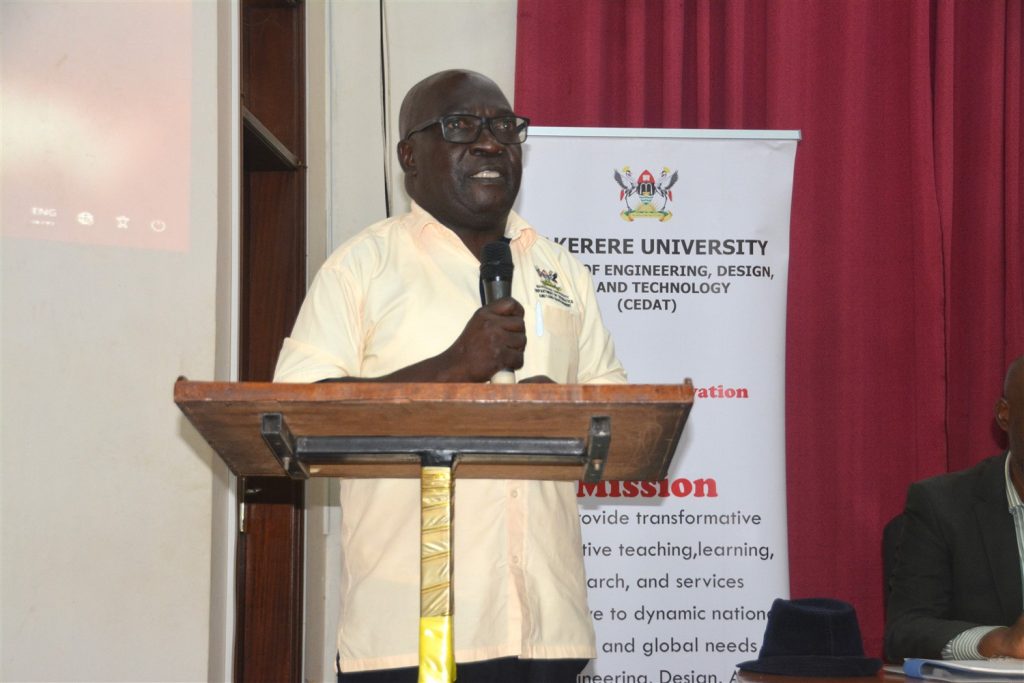
Uganda must urgently remove politics from urban planning and consider nationalizing land in cities to stop chaotic growth, Associate Professor Kizito Maria Kasule, Deputy Principal at Makerere University’s College of Engineering, Design, Art and Technology (CEDAT), said Thursday.
Speaking at a validation workshop for the Urban Expansion Planning Project at CEDAT, Prof. Kizito pointed to Kampala’s transformation since 1989. “Areas like Kikumi Kikumi and Kiwunya Parish were once banana plantations,” he said. “Today everyone is building, putting up the house anyhow, the way they want.”
He cited the failed Namungoona upgrade as proof that planning without political will fails. “World Bank-funded planned housing was sold off and new slums emerged nearby,” he said. “We have good plans when it comes to urban planning. Implementation is a problem.”
“Remove Politics, Nationalize City Land”
Prof. Kizito called for radical reform. “If we want to have proper urban planning in this country, there is an urgent need to remove politics from all matters concerning urban planning. Without that, don’t expect anything positive.”
He added: “I strongly feel there is a need for the government to look into the matters of nationalizing land in urban centers… to allow proper planning.”
Makerere Launches National Urban Knowledge Hub
To tackle unplanned growth, CEDAT has established a new national knowledge hub, announced Dr. Kiggundu Amin Tamale, Head of the Department of Urban and Regional Planning.
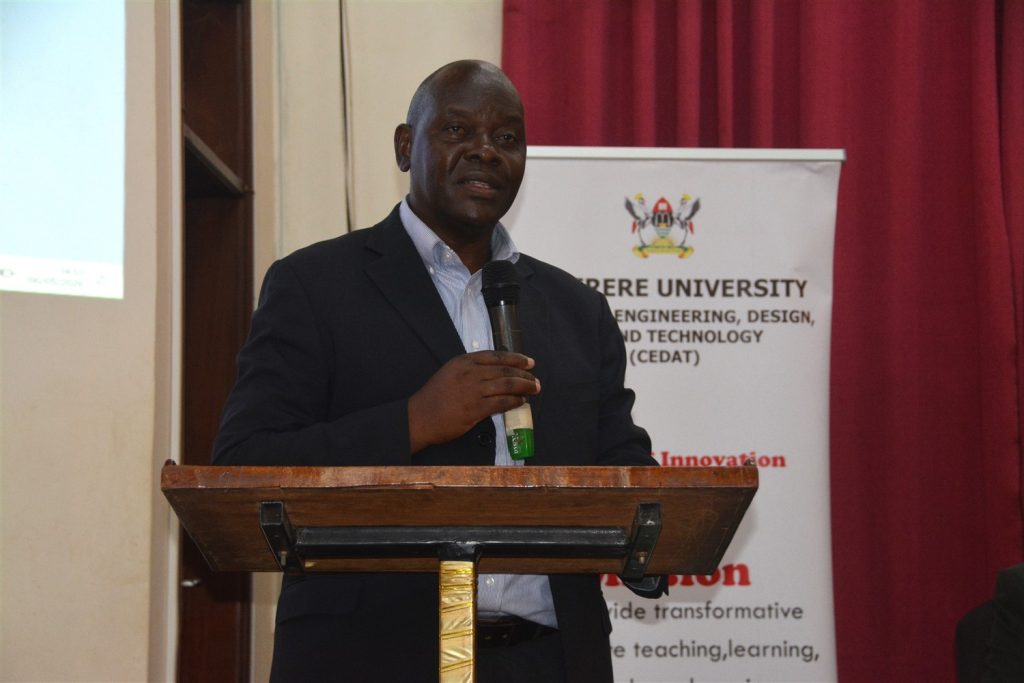
Key outputs include a digital platform under the new Makerere University Regional Center for Urban Research, Governance and Innovation. “Today we already have this knowledge hub in the form of a digital platform, functional and established under the Regional Center,” Dr. Tamale said.
The project has trained 98 trainers on urban expansion planning and developed an online short course with African Urban Lab. It also created a practitioner network with the Urban Authorities Association of Uganda (UAAU) and a land management handbook for Greater Kampala.
“Research is very critical. Information is very critical on whatever intervention that you want to implement,” Dr. Tamale said. The center will train city leaders and “change agents” to improve urban competitiveness.
Rollout to 11 Cities, 589 Town Councils
UAAU Secretary General Barabanawe Francis said urban expansion planning will soon roll out to all 11 cities, 31 municipalities, and 589 town councils after a seven-year pilot succeeded in Jinja, Mbale, Arua, Koboko, and Gulu.
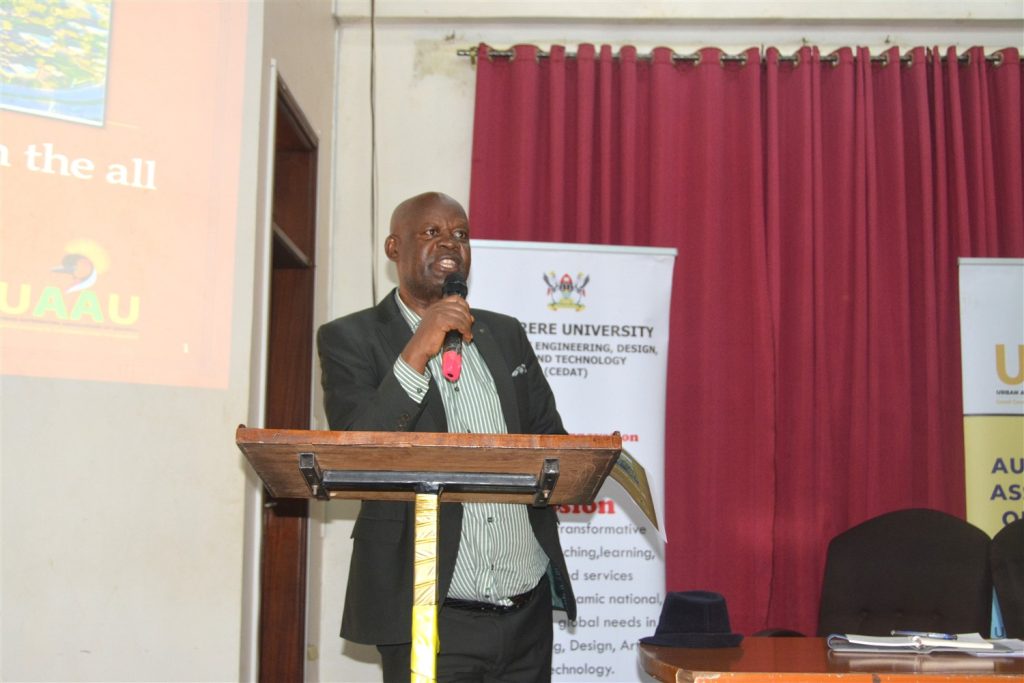
“If you experiment something and it succeeds, then you roll over other areas,” he said. With Uganda’s urbanization at 5.4%, “we must make sure we move very fast to precede them, to be ahead of them, and plan ahead of them.”
The plan starts with six new cities – Soroti, Lira, Masaka, Mbarara, Hoima, and Fort Portal – where 30-meter-wide arterial roads will link centers to peripheries. “We are going to construct roads, big roads for 30 kilometers in the periphery,” Barabanawe said.
He urged town councils to budget at least 30 million shillings for planning. “If you have got a mayor and a town clerk, both of them are positive, there can be no problem.”
Arua: Fastest Growing, Critical Gaps
National UEP Program Coordinator Eriaku William said Arua is now Uganda’s largest city by area but only 8 of 100 planned arterial roads are open. “Arua borders two international borders, DRC and South Sudan,” he noted, yet most of its 401 sq km has almost no council-owned land – “a very bad indicator.”
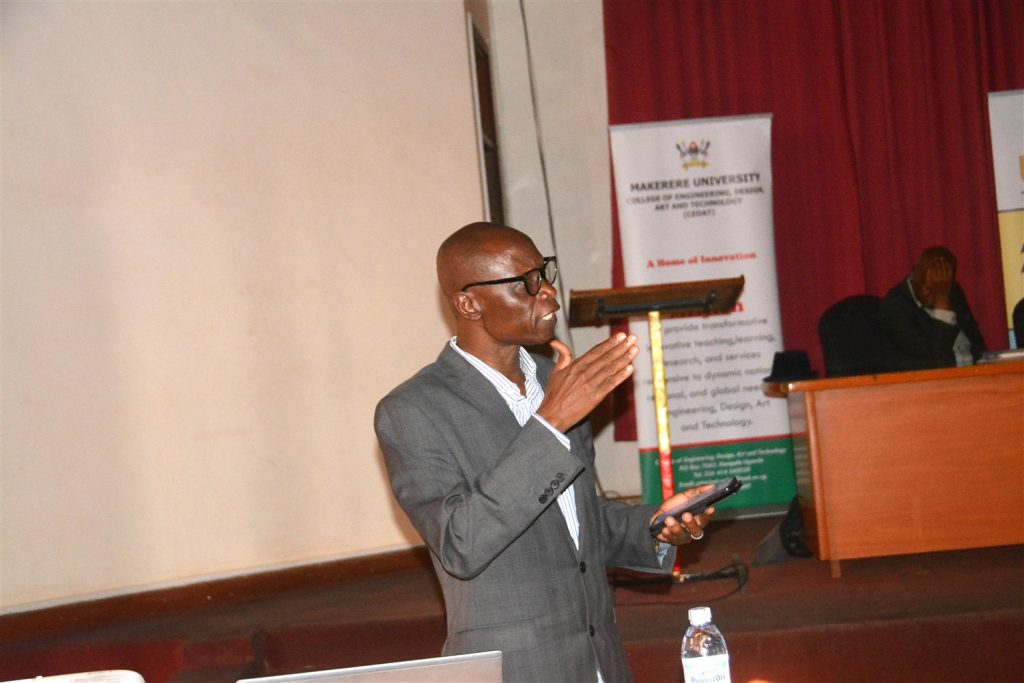
Other cities face challenges too. “Mbale used to be the cleanest city in East Africa, but this is no more,” Eriaku said. “Jinja used to be the industrialized town in Uganda, but this also is no more.” Most cities lack a physical development plan, land officer, or staff surveyor. “They have only one physical planner.”
Ministry to Mainstream Urban Planning
Representing the Commissioner for Physical Planning, Ssenyonjo Andrew said the Ministry of Lands, Housing and Urban Development will entrench urban expansion planning into the National Land Use Policy and ministry budgets starting July 2026.
“Where the plans are and are being prepared, these plans have to be implemented. And their implementation requires financing,” he said. The Uganda Cities and Municipalities Infrastructure Development Program will direct its Institutional Strengthening Grant toward urban expansion planning.
“Business as Usual Won’t Work”
Cities Alliance Country Technical Advisor Mabala Samuel called for mandatory 30-year expansion plans for all councils. “Urbanization does not respect those administrative boundaries. It always goes beyond… we are not responding appropriately,” he said.
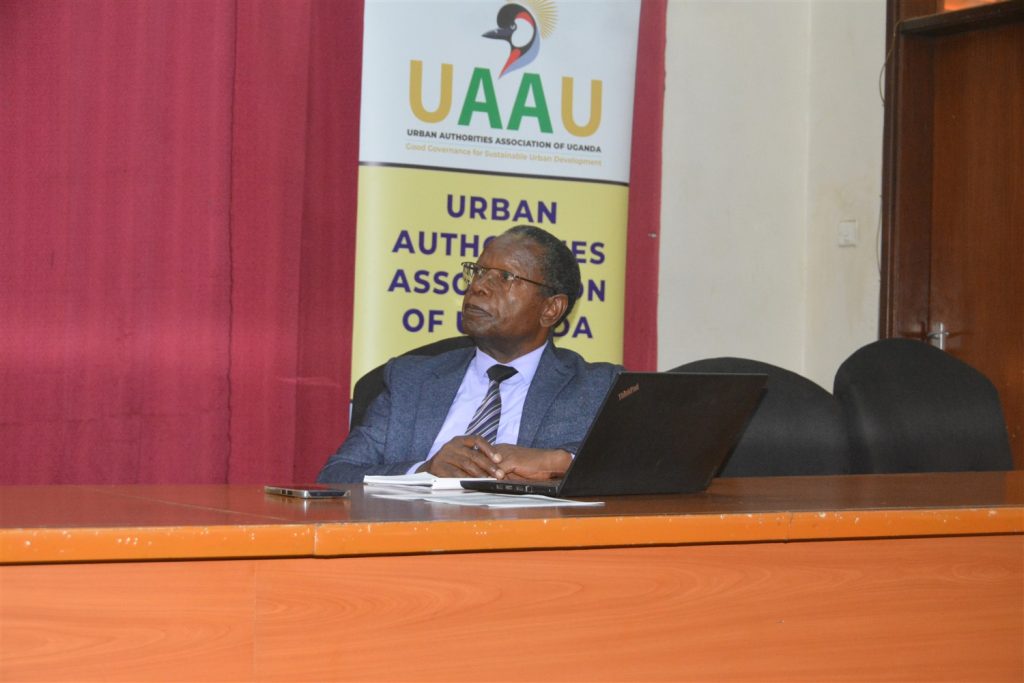
With over 60% of Ugandans in slums and 70% of GDP from cities, Mabala stressed: “The cities that are well planned serve as engines for economic growth. If we could only invest more in our cities, we would accelerate our transformation.”
National UEP Mentor and Physical Planning Board President Derek Muhwezi added that urban councils must own land and fund planning. “You cannot milk a cow that you don’t feed,” he said. “Councils don’t need to wait for money from the Centre.”
The three-year initiative, funded by Cities Alliance and UNOPS, targets Jinja, Gulu, Arua, and Koboko amid rapid settlement growth where “many areas are still un-serviced” and “lack the required infrastructure, like roads, power lines, water.”
Pull Quotes for Web Boxes
“We have good plans when it comes to urban planning. Implementation is a problem.” – Prof. Kizito Maria Kasule
“If we don’t move very fast… once they have subdivided all this, where shall we now pass?” – Barabanawe Francis, UAAU
“Urbanization can be the most powerful driver of national development. The choices we make today will determine the path.” – Mabala Samuel, Cities Alliance