By Harriet Musinguzi
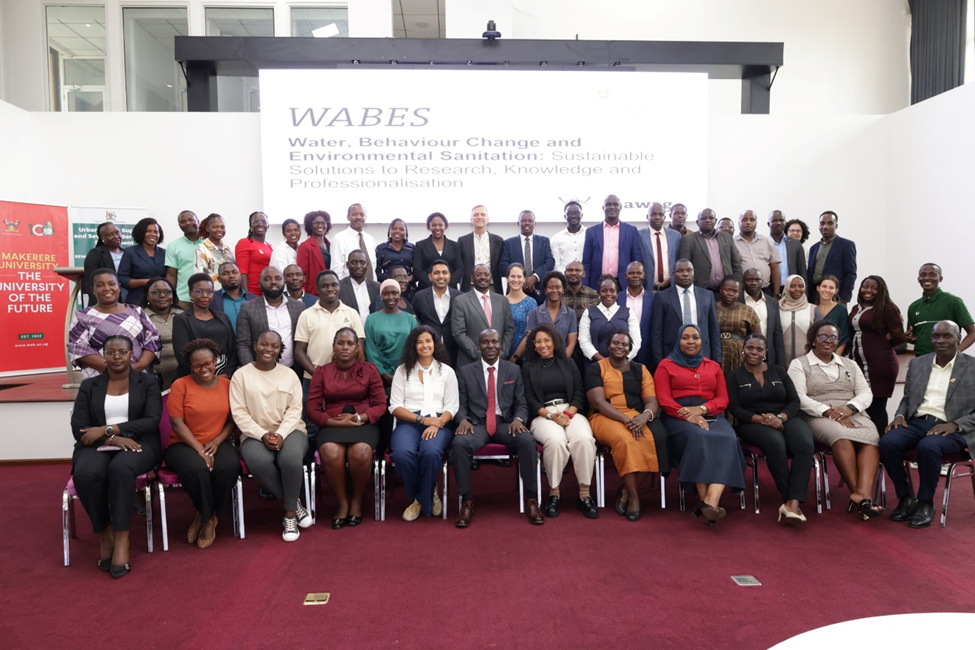
A team of researchers led by Principal Investigator Dr. Chris Luthi from the Swiss FederalInstitute of Aquatic Science and Technology (Eawag) and his Ugandan counterpart Prof. Charles Niwagaba from the College of Engineering, Design, Art and Technology (CEDAT) on Tuesday October 21st, 2026, concluded the four-and-a-half-year Water, Behavior Change and EnvironmentalSanitation(WABES) research project with a closing and dissemination workshop held at the Ministry of Water and Environment offices in Kampala.
The workshop showcased 40 knowledge products (Knowledge Products Database: WABES Knowledge Outputs – Airtable) generated through the project, highlighting key findings and innovations in water, sanitation, and hygiene (WASH) interventions. The outputs complement more than 10 peer-reviewed journal articles already been published, with several others currently under review and in the publication pipeline, representing significant contributions to evidence-based policy and practice in water, environmental sanitation, and behavior change programming.
Representing the Vice Chancellor of Makerere University, Prof. Barnabas Nawangwe, the Deputy Vice Chancellor for Academic Affairs, Prof. Sarah Ssali, praised the project’s achievements and its contribution to research capacity development.
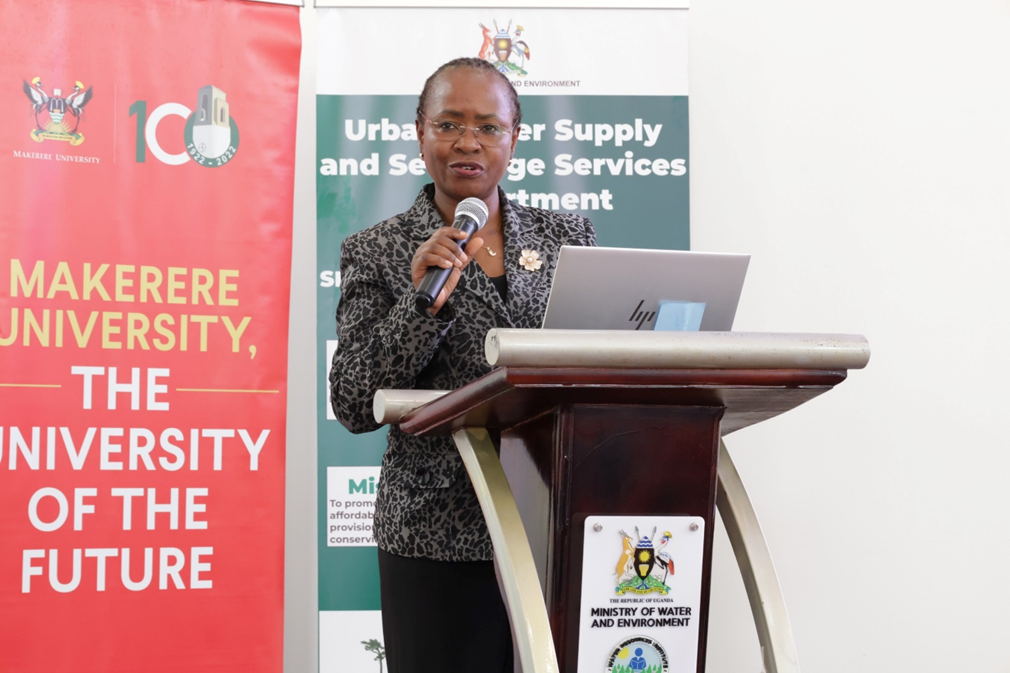
“I am delighted to participate in the closure of a project that brought together researchers from Eawag and Makerere University,” Prof. Ssali said. “As a research-led institution, Makerere takes pride in initiatives that generate knowledge, build human capacity, and address societal challenges.” She commended the local Principal Investigator, Prof. Charles Niwagaba, for his innovative research, noting that his work has demonstrated how value can be generated from materials often regarded as waste. “Makerere University has researchers who are capable of transforming what many consider useless into valuable resources,” she said.
Prof. Ssali emphasized that the WABES project aligns with Makerere University’s internationalization agenda and broader strategic objectives aimed at strengthening global research partnerships and increasing postgraduate enrollment, particularly among women pursuing science, technology, engineering, and mathematics (STEM) disciplines.
She revealed that the university is working to increase STEM enrollment from the current 30 percent to 55 percent, while also expanding postgraduate training, improving completion rates, and boosting research outputs, innovation, commercialization, and patent generation.
According to Prof. Ssali, ongoing efforts to strengthen staffing include expanding positions at the professorial and associate professorial levels while nurturing the next generation of researchers.
She further noted that the WABES project made a significant contribution to postgraduate training by supporting young scientists and researchers whose work is advancing knowledge in the WASH sector.
“The dissemination of the WABES project reflects Makerere University’s aspirations of providing a platform for senior scholars to offer leadership while mentoring emerging researchers,” she said.
The project supported several postgraduate students, including Davis Majara, Olivia AshabaAheebwa, and Asbat Katongole, whose research focused on various aspects of water, sanitation, and environmental management. Their work, Prof. Ssali noted, contributes to Uganda’s human capital development agenda under the Fourth National Development Plan (NDP IV).
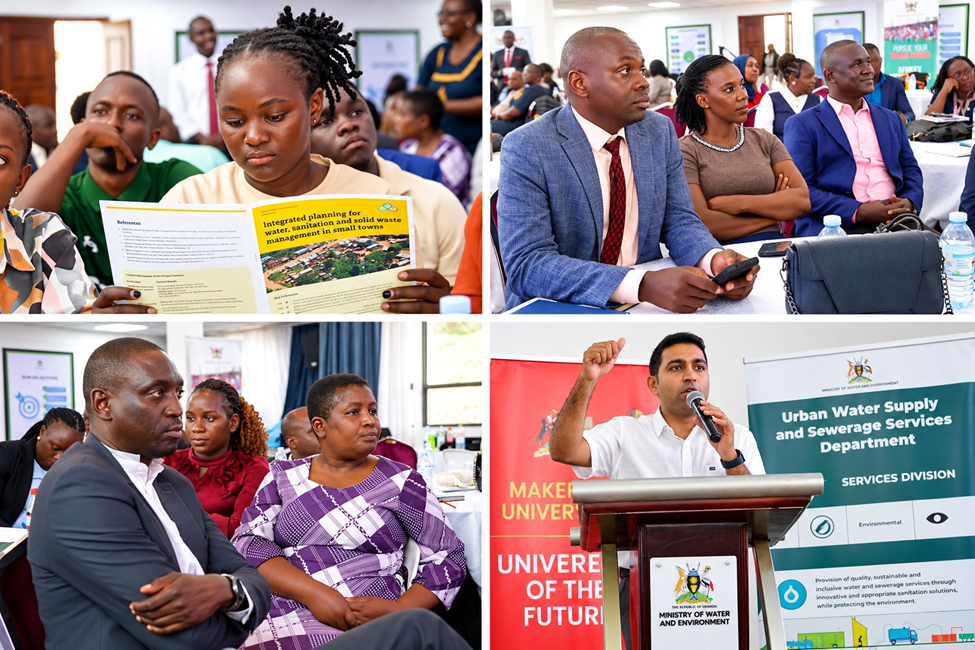
She also highlighted the project’s use of Wobulenzi and Kakooge town councils as living laboratories for testing and refining innovative solutions. The approach, she said, exemplifies Makerere University’s transition from theoretical instruction to competence-based educationand training, while demonstrating the value of interdisciplinary research in addressing community challenges.
Among the key outputs disseminated were a policy brief and an integrated planning framework for water supply, sanitation, and solid waste management in small towns. Participants expressed optimism that the documents would inform sector planning and contribute to Uganda’s efforts to achieve the Sustainable Development Goals (SDGs).
Dr. Chris Luthi, the Principal Investigator from Eawag, said the WABES project had made a significant contribution to improving access to essential services among target communities, particularly in the areas of safe water provision, sanitation, and solid waste management.
He attributed the project’s success to strong collaboration among key stakeholders, including the Ministry of Water and Environment, Makerere University, and the Wobulenzi and KakoogeTownCouncils, which served as demonstration sites for testing and implementing innovative solutions.
Providing an overview of the project, Prof. Charles Niwagaba, the local Principal Investigator, said WABES was funded by the Swiss Agency for Development and Cooperation (SDC) and focused on the integration of water supply, sanitation, and solid waste management services.
He explained that the project was founded on the understanding that these services are interconnected and that weaknesses in one area inevitably affect performance in the others.
“You cannot effectively address sanitation challenges while neglecting solid waste management or water supply. The three services are interdependent and require integrated planning and implementation,” Prof. Niwagaba said.
He noted that the research team adopted a “living labs” approach by working closely with local governments and communities in Wobulenzi and Kakooge to jointly identify challenges and develop practical solutions.
“We deliberately worked with the towns as living laboratories, bringing stakeholders together to identify problems, test innovations, and co-create solutions that respond to local needs,” he said.
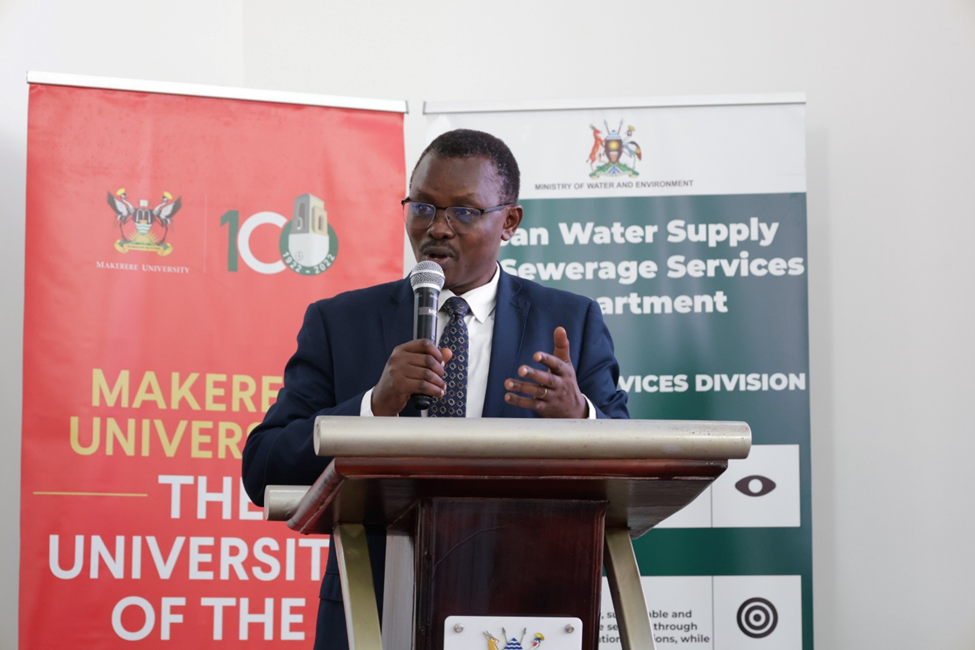
Prof. Niwagaba observed that inadequate support for integrated service delivery in small towns had long been a gap within the sector. The WABES project therefore sought to generate evidence and practical tools that could guide planning and investment in water, sanitation, and environmental services in rapidly growing urban centers.
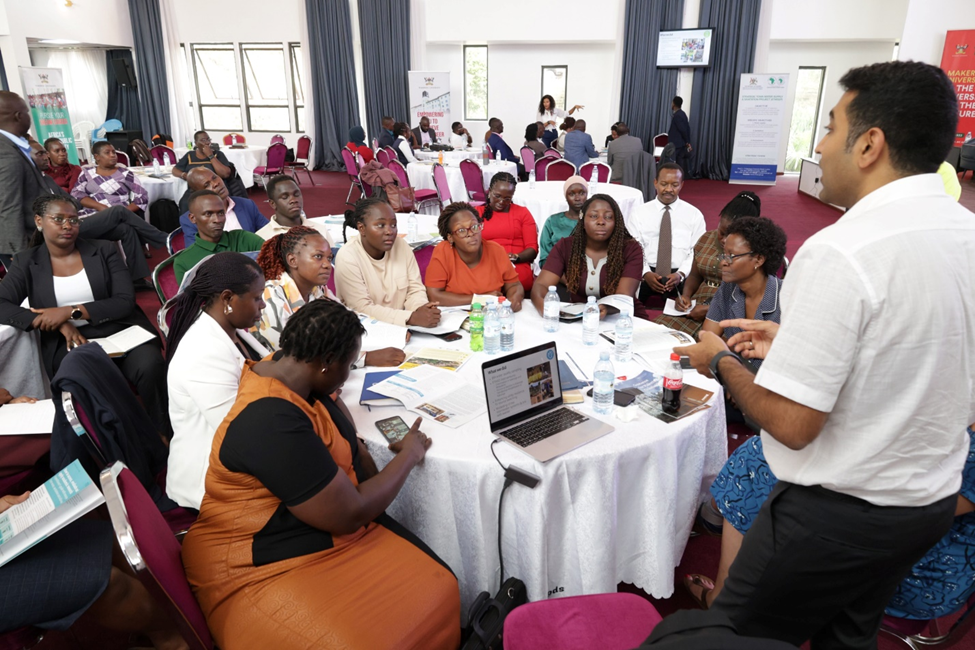
The WABES project brought together researchers, government officials, development partners, local authorities, and community members to generate practical evidence and innovative solutions aimed at improving water management, sanitation services, and environmental health outcomes in Uganda and beyond.
Posted by
Isemaghendera Alex, IT Officer, CEDAT