
Research Interests
Philip’s research interests broadly encompass Water Resources Engineering, Hydrology, and Water Supply and Sanitation. His work integrates theory and field practice, with emphasis on modelling, field investigations, and applied watershed management.
Specific research interests include:
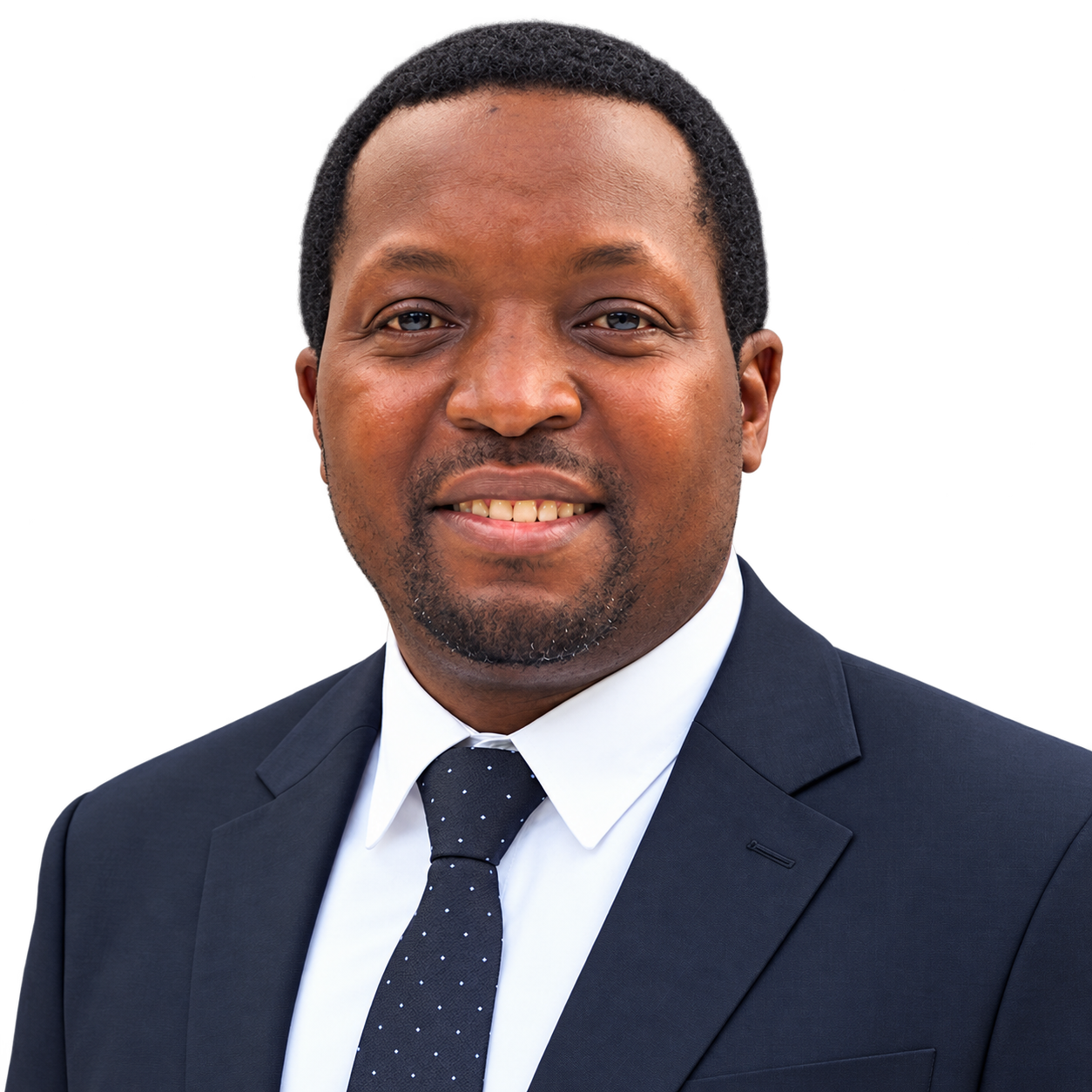
Philip Nyenje is a Senior Lecturer in the Department of Civil and Environmental Engineering at Makerere University, with over 20 years of professional and academic experience in Civil Engineering, specializing in Hydrology and Water Resources Engineering. His expertise also spans groundwater systems, water supply and sanitation, and integrated water resources management.
He holds a PhD in Hydrology and Water Resources from Delft University of Technology and UNESCO-IHE (Netherlands), a Master’s degree in Water Resources Engineering from KU Leuven (Belgium), and a Bachelor’s degree in Civil Engineering from Makerere University.
His research focuses on hydrological modelling, flood risk assessment, groundwater flow systems, water quality, and contaminant transport processes. He has been involved in several research and professional projects across Uganda and East Africa, including catchment-based water resources management and community-based initiatives aimed at improving access to safe water in underserved urban areas.
Philip is proficient in the application of hydrological and hydraulic models such as HEC-HMS, SWAT, SWAT+, HEC-RAS, and Delft3D, as well as groundwater and water quality models including MODFLOW and PHREEQC. He is also skilled in Remote Sensing (RS), GIS (QGIS, ArcGIS), and data analysis using R, Python, and SPSS.
In addition to teaching, he serves on the School of Engineering Research and Higher Degrees Committee, the Departmental Graduate Research Seminar Coordination Committee, and the Departmental Online Learning Coordination Committee.
He has authored and co-authored over 20 peer-reviewed journal publications in hydrology and water resources.
2014: PhD Hydrology and Water Resources UNESCO-IHE & Delft University of Technology, Delft, The Netherlands
2007: MSc Water Resources Engineering (Hons) Katholieke University Leuven and Vrije Universiteit Brussels, Belgium
2006: Diploma, Complementary studies Master in Water Resources Engineering Katholieke University Leuven and Vrije Universiteit Brussels, Belgium
2003: BSc Civil Engineering (Hons) Makerere University, Kampala Uganda
Enhancing the Distance Education Environment at Makerere University (July – August, 2025) by Korea National Open University/ Korea Institute for Development strategy.
Climate Risk Informed Decision Analysis (CRIDA) training, a participatory/bottom-up approach for integrating climate change into water resources planning (2025). Organised by UNESCO-IHP and AWARe Initiative (Action for Water Adaptation and Resilience), in Egypt.
The Oak Seed Executive Leadership Course, Executive Leadership Course, Institute for National Transformation (INT), Kampala, Uganda.
1-D and 2-D hydraulic modelling using Delft 3D with case study of Nalukolongo channel. Deltares Software Days in Kampala.
Supporting Uganda’s Climate Resilience in Water Resources Management by K-water Academy (KOREA) & Water Resources Institute (WRI, Entebbe Uganda).
Introduction to Probability and Data with R. An online non-credit course authorized by Duke University and offered through Coursera. Certificate.
SWATplus (Soil and Water Assessment Tool for QGIS) for Water resources management in developing countries. Open water symposium organised by UNESCO-France and l’Institut Institut Agronomique et Vétérinaire Hassan II in Rabat, Morocco.
Published books
Nyenje, P. M, 2014. Fate and Transport of Nutrients in an Urban Slum Catchment, Kampala, Uganda. PhD Thesis, CRC Press/Balkema Publishers, Leiden, The Netherlands. ISBN 978-1-138-02715-2.
Sylvia Tramberend, Robert Burtscher, Peter Burek, Taher Kahil, Günther Fischer, Junko Mochizuki, Yoshihide Wada, Richard Kimwaga, Phillip Nyenje, Risper Ondiek, Prossie Nakawuka, Canute Hyandye, Claver Sibomana, Simon Langan. East Africa Water Scenarios to 2050. International Institute for Applied Systems Analysis, Austria. May 2019
Published Journal Articles
Travels and adventure, jogging, board games, tennis, football