
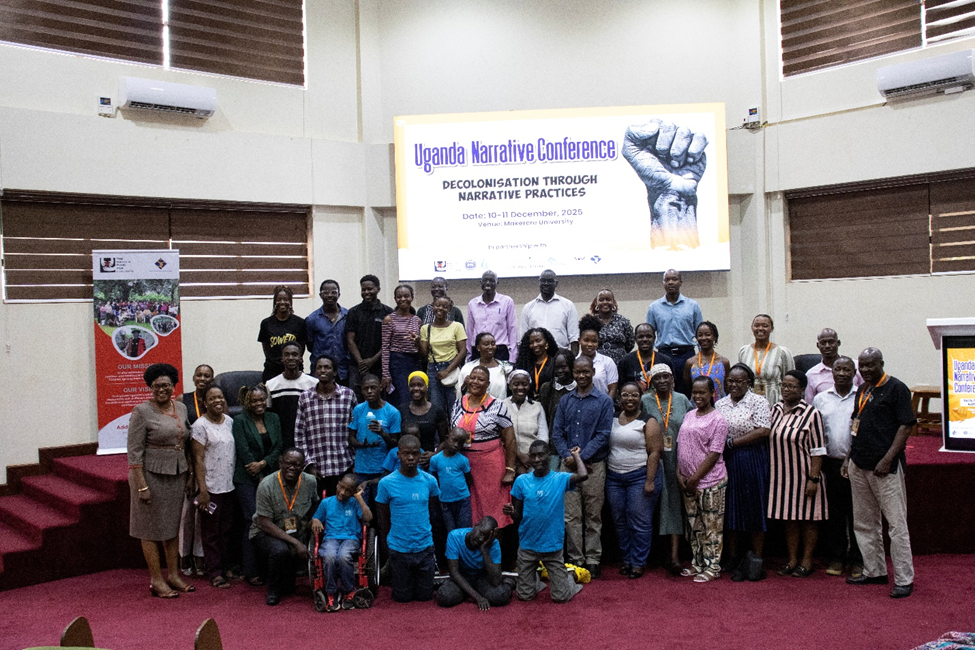
Makerere University placed art at the heart of its Narrative Practices Conference, unveiling an exhibition from the Margret Trowel School of Industrial and Fine Art (MTSIFA) that reimagines myths and everyday life. The showcase highlighted how visual creativity can act as a catalyst for decolonisation, inviting audiences to engage with African realities through images that challenge, inspire, and transform.
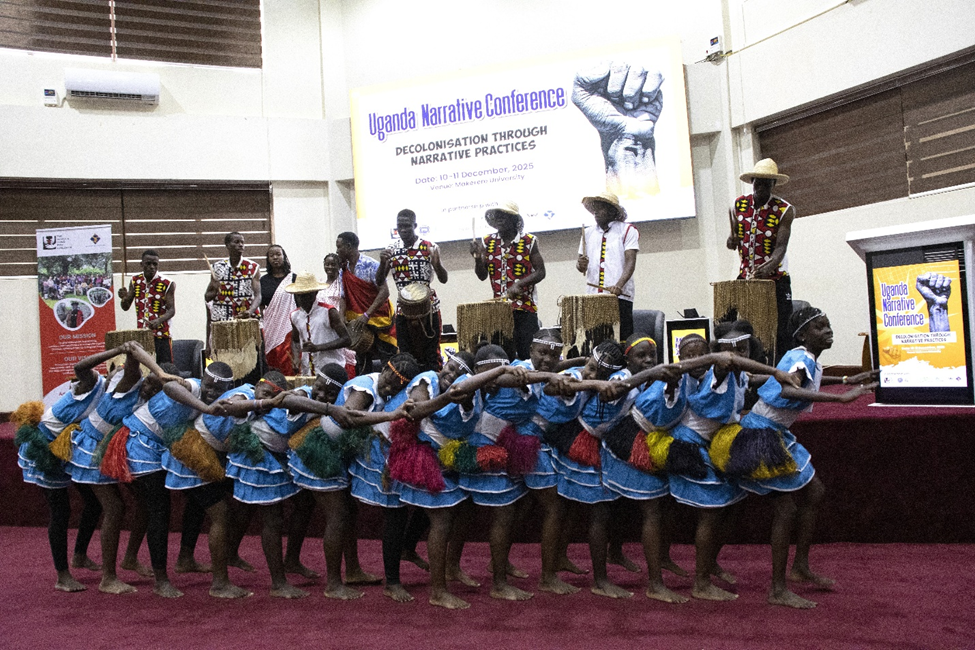
The Second Biennial Narrative Practices Conference was convened on December 10–11 at the Public Health Auditorium, under the theme Beyond the Ivory Tower: Our Stories, Our Spaces, and Decolonial Visions at Makerere University. The event hosted by the Department of Fine Art (DFA), College of Engineering, Design, Art and Technology (CEDAT), was organized in collaboration with Smith College School for Social Work (USA), The Makula Fund for Children, Peer Nation, Geruka Healing Centre, St. Lucia Children’s Home (Tanzania), and Save the Disabled Children Gaba.
The collection featured striking images of elephants, empty seats, masked dancers, fenced women, para-athletes, and elders by the hearth. Each work reframed everyday life and cultural myths, echoing the insight from narrative therapy that identities are not fixed but continually authored through the stories people tell and the stories told about them. Together, the pieces invited audiences to confront silences, question stereotypes, and engage with African realities in fresh and transformative ways.
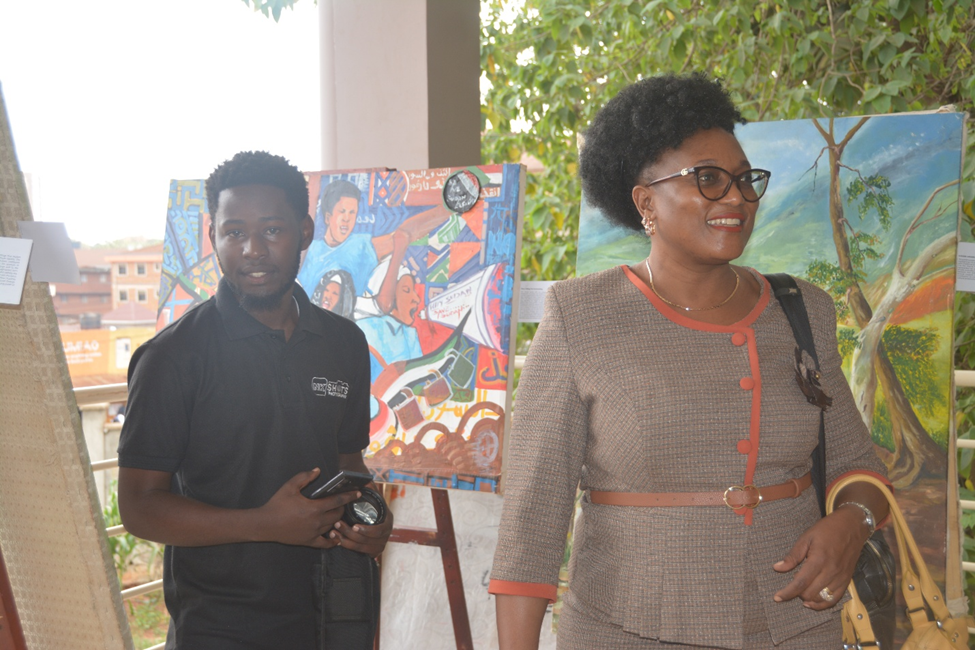
Dr. Ritah Nabuyungo Edopu, the head of the Department of Fine Art at MTSIFA emphasized the importance of the exhibition in shaping dialogue. “Art allows us to confront realities that statistics alone cannot capture,” she said. Attendees echoed this sentiment, noting how the works sparked conversations about identity, resilience, and inclusion. Dr. Edopu the exhibition’s curator, highlighted that the artists’ role was not only to display talent but to challenge audiences to rethink everyday narratives. “These images stay with you,” she noted. “They make you feel the weight of history and the urgency of transformation.”
Exhibition of career relevance and social impact of fine art
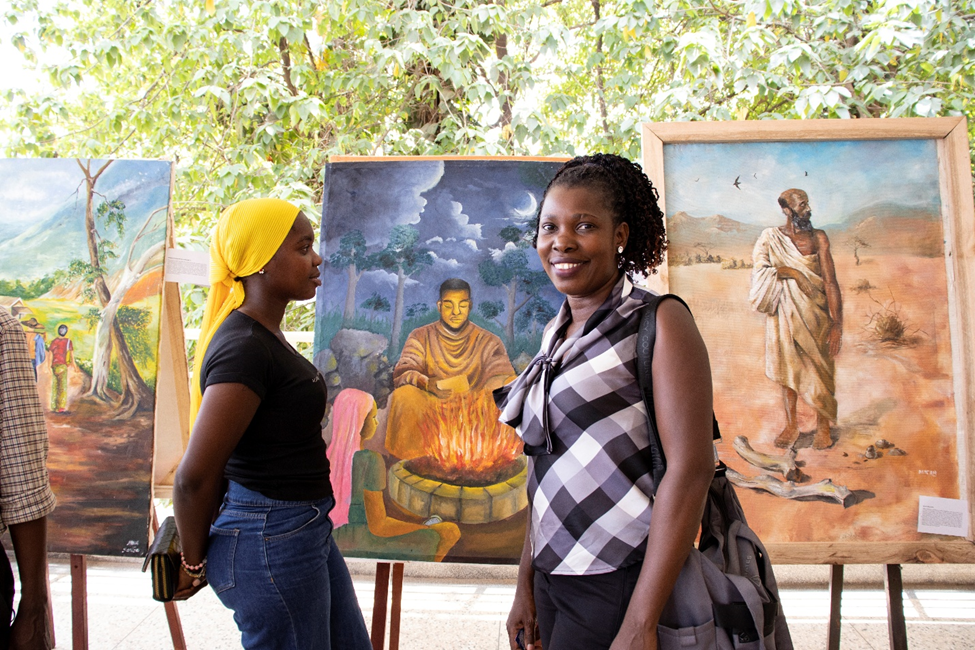
The exhibition by staff and students offered an exploration of art as research and social transformation. Through paintings, performances, and curated narratives, the showcase re‑told myths, elevated everyday labour, and highlighted themes of vulnerability, ecological knowledge, and community justice. Each section, from Re‑telling Origins to Curating as Narrative Practice, demonstrated how fine art can unsettle colonial accounts, make unseen voices visible, and position Makerere as a decolonial space of knowledge production. Collectively, the exhibition embodied the university’s mission of inclusion, innovation, and societal transformation, while affirming the power of creative practice to re‑author stories and imagine new futures.
Through oil paintings and scholarly articles, the showcase embodied practice-based research that re-authored narratives of self, community, and institution. By revisiting myths such as Kintu and Nambi, Gipir and Labongo, and Wakayima and Wango, the works challenged colonial ethnographies and foregrounded marginalized voices. Complementary pieces depicted everyday labour like children tending goats, women fetching water, and Bahima dairy traditions thereby reframing these practices as sites of dignity, ecological wisdom, and community ethics.
The exhibition demonstrated that Fine Art students are equipped for diverse careers beyond the studio. Students can pursue work as professional artists, curators, cultural researchers, educators, and community development practitioners. Their training in visual storytelling and practice-based research prepares them to contribute to heritage preservation, creative industries, policy advocacy, and social transformation initiatives across Uganda and beyond.
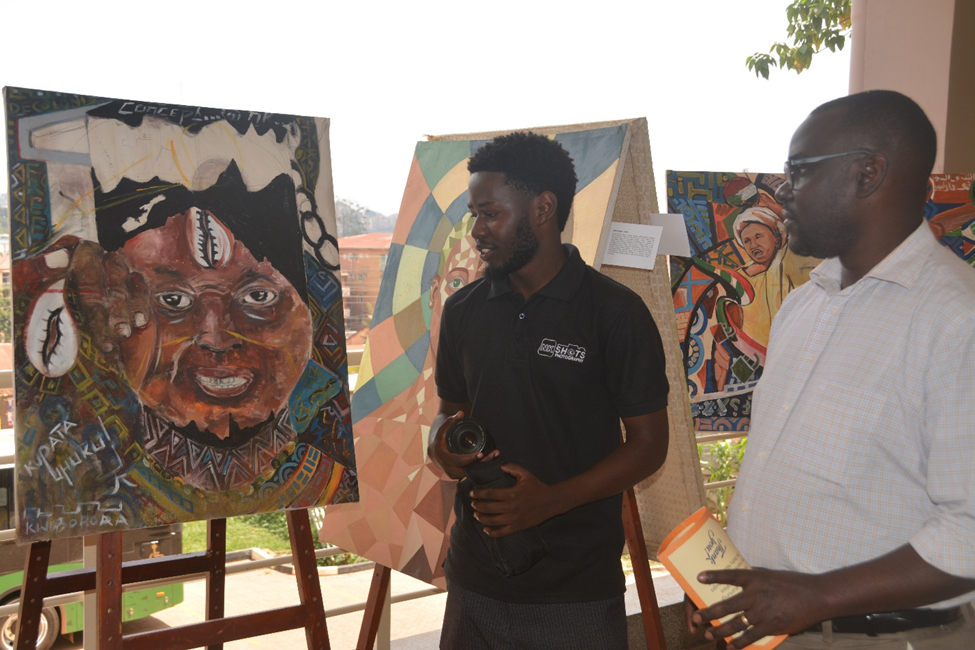
The two -day exhibition at Makerere University’s Narrative Practices conference underscored the role of visual art in advancing the institution’s mission of societal transformation. Far from being peripheral, the works from the Margret Trowell School of Industrial and Fine Art placed inclusion, relevance, and transformation at the center of the decolonisation debate. By making the unseen visible and the forgotten unforgettable, the artists offered images that not only speak to Africa’s realities but also challenge audiences to feel, debate, and remember.
Written by Harriet Musinguzi, Principal Communication Ofiicer, Makerere University, College of Engineering, Design, Art and Technology
Posted by Isemaghendera Alex, IT Officer, Makerere University, College of Engineering, Design, Art and Technology