
By Harriet Musinguzi
Kampala, June 19, 2026 — Makerere University Vice Chancellor, Prof. Barnabas Nawangwe, led a high-level visitation meeting at the College of Engineering, Design, Art and Technology (CEDAT) to deliberate on strategies for enhancing graduate education and research output. The meeting brought together senior management, faculty, and directors of key university units to reflect on achievements, challenges, and interventions needed to scale up postgraduate training in line with Makerere’s strategic plan.
Building Capacity for Graduate Training
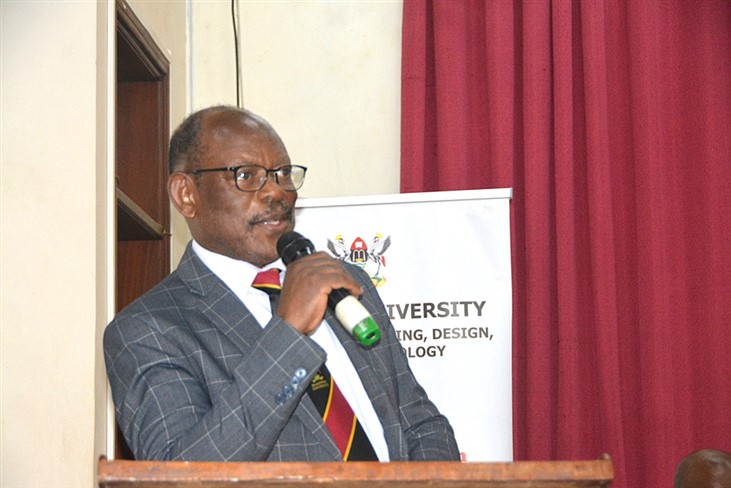
In his address, Prof. Nawangwe emphasized that Makerere has already developed significant capacity, with over 1,200 PhD holders and $250 million raised annually in research funding through international collaborations. He assured staff that the forthcoming graduate structure will address pressing challenges such as limited space, inadequate research facilities, and the sustainability of academic journals. “With this capacity, nothing can stop us from transforming Uganda,” he remarked, underscoring CEDAT’s role in advancing innovation and applied research.
State of graduate training at CEDAT
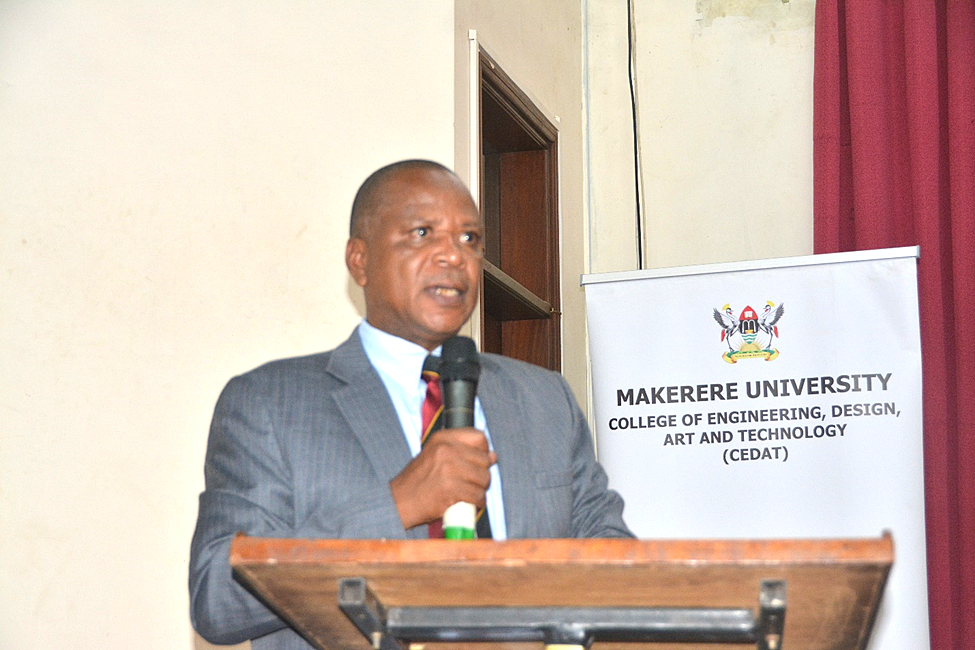
CEDAT Principal, Prof. Moses Musinguzi, reported that the college currently hosts 537 graduate students across master’s, postgraduate diploma, and PhD programs, with the School of Engineering accounting for 237 students. While staff capacity is encouraging, with 61 PhD holders across the schools, supervision remains heavily concentrated, with some lecturers handling up to 20 students. He highlighted infrastructure constraints, noting that most facilities were designed for undergraduates, leaving graduate students with limited dedicated research spaces. Proposed interventions include specialized research rooms, fully stocked ICT laboratories, and master’s research grants to support self-sponsored students.
Strengthening Research and Publishing
Committee members emphasized the importance of funding and capacity building. Prof. Robert Wamala, Director of the Directorate of Research, Innovation and Partnerships (DRIP), outlined key thematic areas including research ethics, innovation, technology transfer, and dissemination of outcomes. The Makerere University Writing Centre, represented by Prof. Fredrick Muyodi, pledged to support staff and students in improving grant writing and publishing, while Prof. Tayebwa from Makerere University Press reaffirmed the university press’s commitment to reviving journals for global visibility and academic promotion.
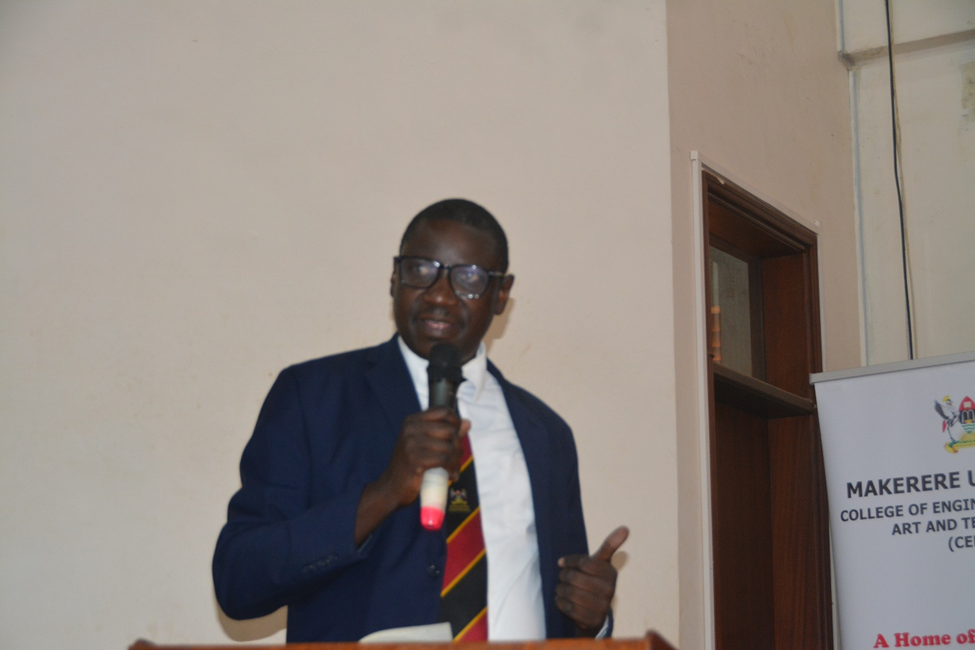
Dr. Cyprian Misinde, Director of Quality Assurance, stressed that for Makerere to rise in global rankings, its research must be published in high-impact, indexed journals. He revealed that the University Council had resolved that staff should prioritize publishing in credible outlets while also developing strong home-grown journals. “When you publish in non-indexed journals, you will not be known worldwide,” Dr. Misinde cautioned. He further outlined new measures to strengthen academic integrity and performance, including an online plagiarism-screening system and a framework of performance and quality indicators (KPIs) to track mentorship, supervision, and student completion rates.
From Lab to Market: The Innovation Hub
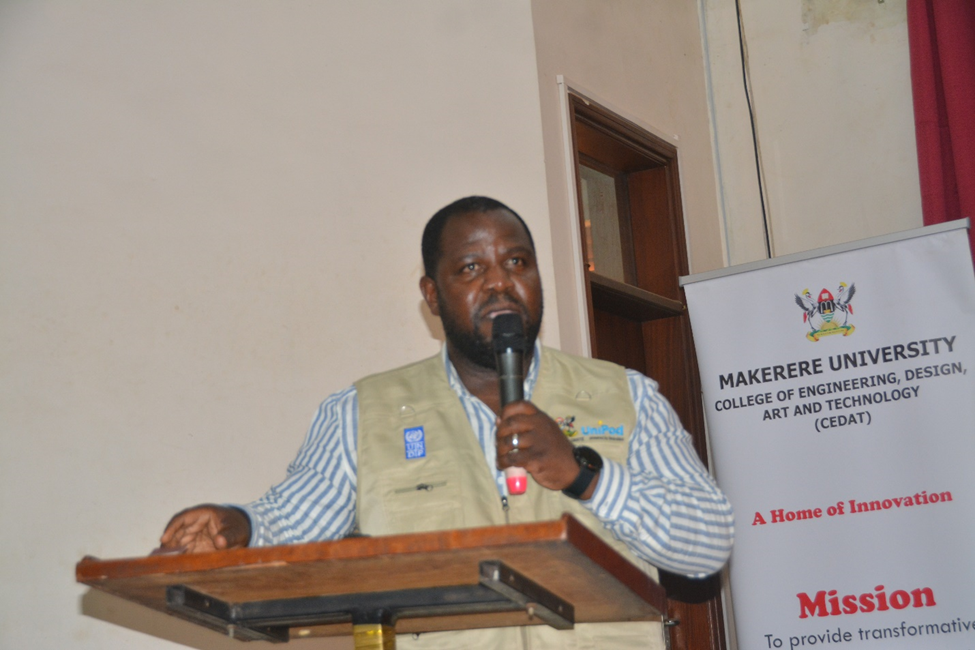
Dr. Michael Lubwama, Acting Manager of the Makerere University Technology Innovation Centre (MUTIC), reminded faculty that research should not end on library shelves but must be translated into tangible solutions. As a multidisciplinary hub, MUTIC supports the commercialization and scaling of innovations through incubation, prototyping, and partnerships. He emphasized the importance of Intellectual Property (IP), reassuring staff that Makerere’s IP policy protects their work while enabling commercial success.
Dr. Lubwama outlined MUTIC’s innovation pipeline—spanning ideation, protection, commercialization, and scaling—and revealed that 15 projects are currently being commercialized with support from the Research and Innovation Fund. Examples include a tractor-driver training partnership with an agricultural firm and a forthcoming printed-circuit-board production line developed jointly with CoCIS and EASLIS, funded by the Science, Technology and Innovation Secretariat. Prof. Nawangwe reinforced this vision, calling for “millionaire professors” whose wealth derives from patents and royalties.
A Renewed Commitment
The meeting concluded with a renewed commitment to strengthening graduate training, enhancing research infrastructure, and positioning CEDAT as a driver of innovation and national development. Makerere’s leadership emphasized that scaling up PhD training, reviving journals, and commercializing innovations are central to the university’s mission of transforming Uganda through knowledge and technology.
Posted by Isemaghendera Alex