
‘There is a need for stronger, more practical partnership between universities and industry in order to push ideas from the laboratories to society’.
This was a statement made by the Makerere University Vice Chancellor Professor Barnabas Nawangwe who also noted that Ugandan research and innovation will only deliver national benefit if ideas are pushed to ensure they benefit the people.
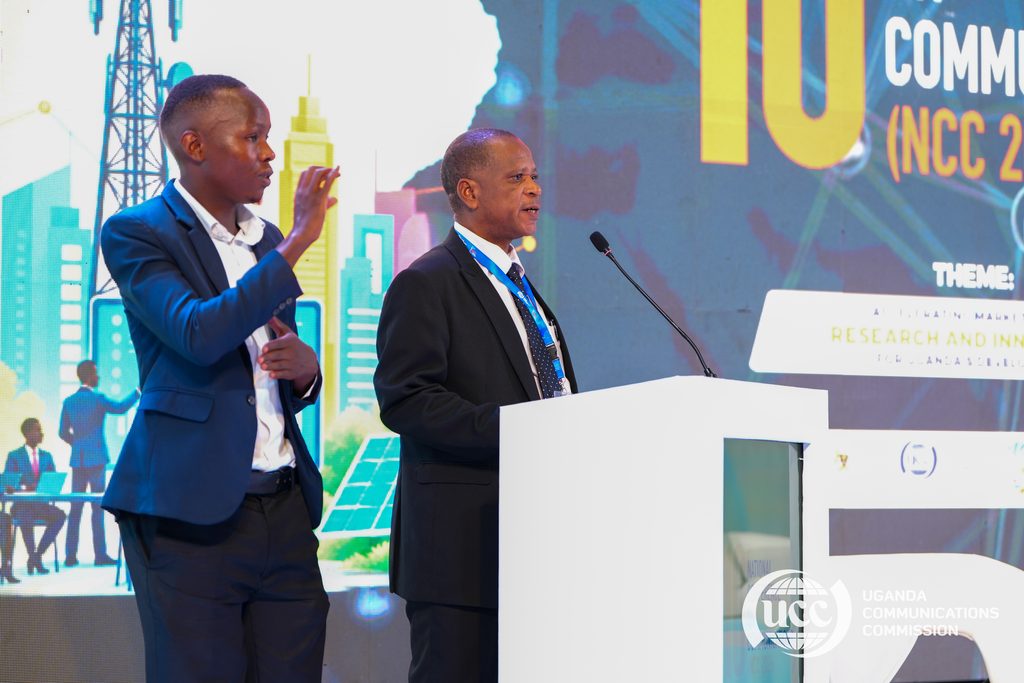
Prof Nawangwe was represented by the Principal of the College of Engineering, Design, Art and Technology (CEDAT), Prof. Moses Musinguzi at the opening of the 10th National Conference on Communications Conference (NCC 2026), hosted at Makerere University under the theme “Accelerating Market-Driven Innovation for Uganda’s Development.” The conference brought together academia, government, regulators, industry players, students and innovators to discuss varied aspects of communication research and technology.
Prof.Nawangwe congratulated the Uganda Communications Commission (UCC) for sustaining the initiative over the past decade and for continuing to partner closely with universities. He thanked UCC for once again entrusting Makerere’s College of Engineering, Design, Art and Technology (CEDAT) with hosting the anniversary edition, describing the relationship between a national regulator and the research community as central to the future of the communications sector.
“The future of the communications sector will depend not only on investment and regulation, but also on knowledge, skills, local research and our ability to develop solutions that fit our own context,” he said.
Nawangwe noted that havinggood research and working prototypes are not adequate by themselves. He said the sector must also ask whether an idea can solve a real problem, whether it is affordable, whether it meets standards, whether it can be maintained, and whether it can scale beyond a single laboratory or project team.
Citing from the examples of Kiira EV, Uganda’s first electric vehicle prototype made in the year 2011 by staff and students from CEDAT, he said that a project that began as university research endeavor later fed into the national effort that produced KiiraMotors Corporation. “We should never assume that a university idea must remain within university confines,” he emphasized. He said that many promising university ideas stall too early, with some remaining permanently at final-year project stage, while others fading once research funding runs out, and still others reaching prototype stage without ever finding users, industry partners or investors.
MUTIC as a Bridge between Research and Market
To help close that gap, Nawangwepointed to the Makerere University Technology and Innovation Center (MUTIC), established in partnership with the United Nations Development Programme under the Timbuktoo Initiative. He described MUTIC as a multidisciplinary hub offering students, staff, young innovators and private-sector partners space for design, prototyping, digital fabrication, product development and technology transfer.
“An innovator needs more than an idea. He or she needs somewhere to build, test, fail, modify, try again, meet users, understand the market and decide whether the solution deserves to move further,” he said.
Nawangwe issued direct challenges to both industry and academia. He urged industry representatives at NCC 2026 not to approach universities only when recruiting graduates, but to bring real engineering problems, co-supervise graduate projects, open appropriate datasets responsibly, and give students access to genuine operating environments.
He equally challenged the academia to ensure that academic research questions derive from real-world problems. “We need students who understand that engineering is not complete when a simulation runs or a prototype switches on. Cost, safety, reliability, standards, maintenance, users and scaling are also engineering questions,” he said.
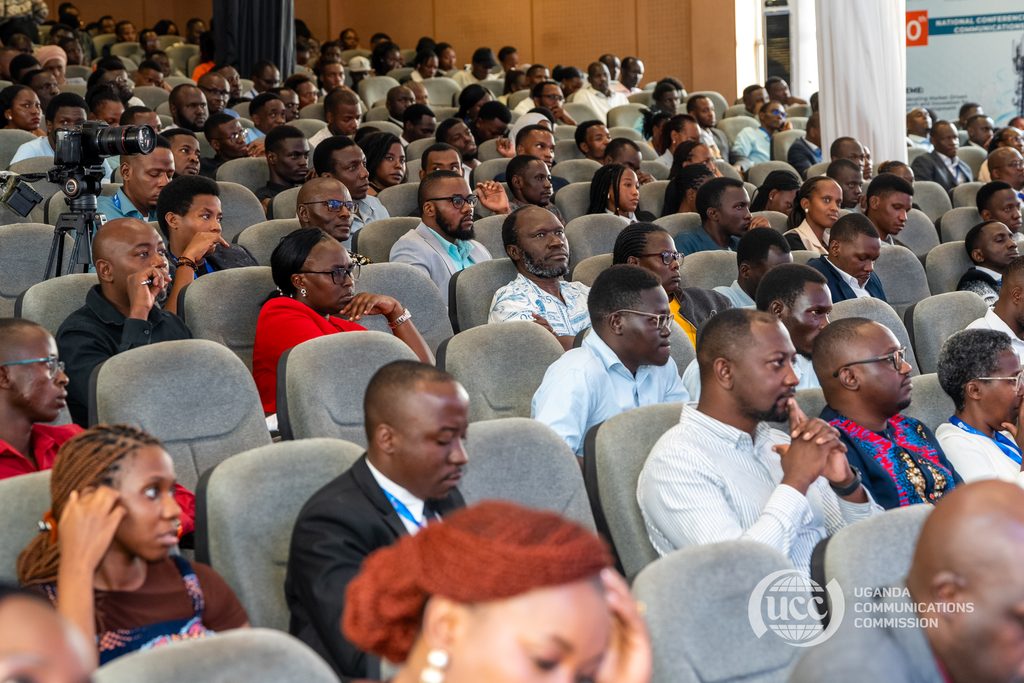
The conference was attended by the Minister of ICT and National Guidance, UCC Executive Director Hon. NyombiThembo, CEDAT Principal Prof. Moses Musinguzi, senior government officials and regulators, university and research leaders, industry representatives, development partners, and student innovators.
Related Stories
Communication Industry Players Seek Tax Waiver on Infrastructure Materials