By Harriet Musinguzi
Following the successful conclusion of the NORPART project, students, staff, and project partners organized The Common Ground Exhibition at the Makerere University Art Gallery from 11th to 13th November 2026. The exhibition featured innovative artworks inspired by indigenous knowledge systems, local materials, and the shared experiences of participants from Uganda and Norway. This was the final activity of the project by Makerere University College of Engineering, Design, Art and Technology and University of Bergen, Faculty of Fine Art, Music and Design
Speaking at the exhibition, Principal Investigator Prof. Phillip Kwesiga highlighted the project’s significant achievements over its implementation period. Among these was the support provided to four Master’s students who pursued advanced training at partner institutions. He noted that the student exchange component, which enabled participants to spend up to six months abroad, greatly enriched their academic and professional development, with many successfully completing their studies.
The exhibition was officially commissioned on Friday, 11th November 2026, by the Deputy Principal of the College of Engineering, Design, Art and Technology (CEDAT), Assoc. Prof.Maria Kasule Kizito. He thanked the project team for hosting the exhibition at the Makerere University Art Gallery, which he described as “our home,” and conveyed appreciation from the Principal of CEDAT, who was impressed by the outcomes achieved during the week-long activities.
Assoc. Prof. Kasule noted that Makerere University’s position as one of the most internationalized universities south of Sub-Saharan Africa has been strengthened by collaborative initiatives such as the NORPART project. He commended the Principal Investigators and their teams for contributing to this international outlook through partnerships that promote research, innovation, and academic exchange. He further highlighted the benefits derived from the collaboration, including graduate training opportunities and staff exchange programs. The exposure to diverse academic and cultural environments is essential for educators seeking to make meaningful contributions to the fields of art, design, and creative research, he noted.
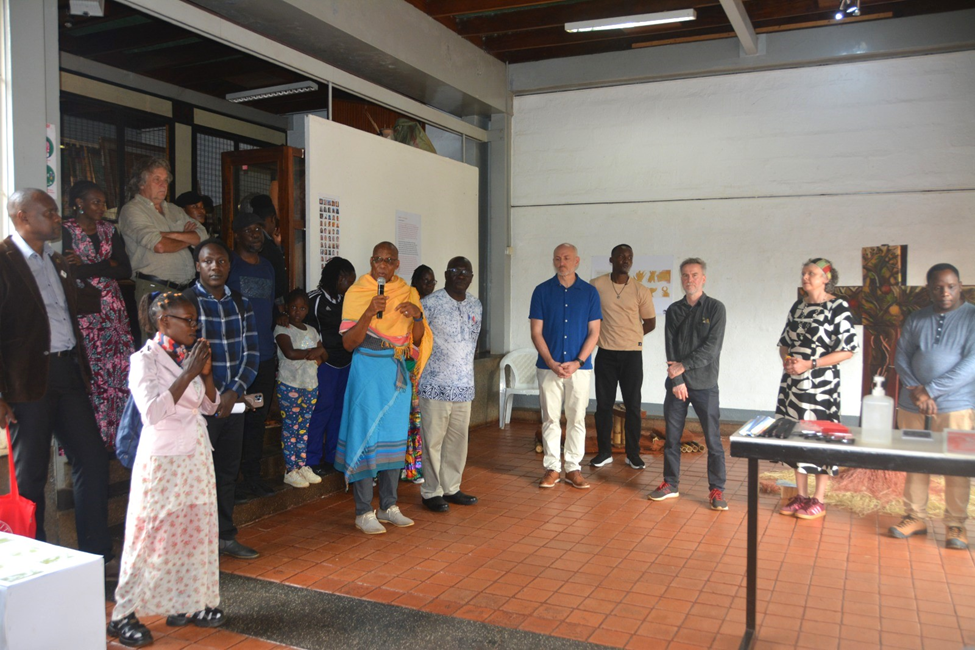
Speaking on the importance of indigenous knowledge, Assoc. Prof. Kasule observed that Africa possesses rich knowledge systems that remain largely underutilized despite their potential value to global society. He called for renewed efforts to document, preserve, and apply indigenous knowledge for the benefit of humanity.
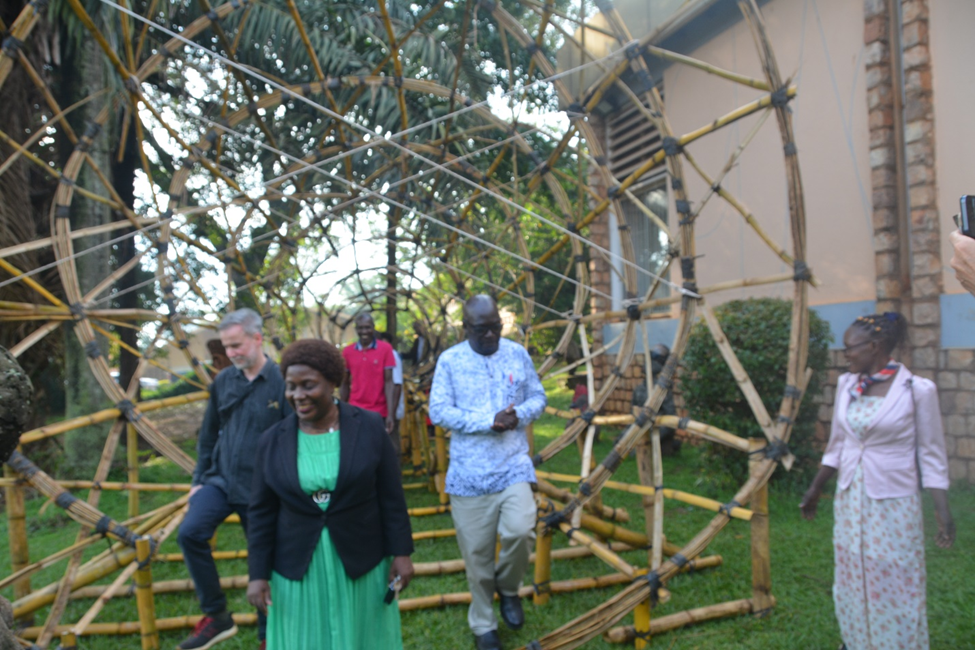
The works started off the creative process with conceptual sketches guided by the theme Common Ground. They then explored materials that were familiar and accessible within their local environments, transforming their ideas into a range of artistic installations. One of the notable outcomes was a large megaphone-inspired sculpture symbolizing communication, shared voices, and collective understanding.
A representative from the Bergen Office at Makerere University expressed pride in being associated with the project from its inception. He noted that collaboration between Makerere University and Norwegian institutions spans more than three decades and has created valuable opportunities for both students and staff. He expressed optimism that future partnerships would continue to expand exchange opportunities and strengthen academic cooperation between the two countries.
The Common Ground Exhibition demonstrated the transformative power of art, design, and international collaboration. By bringing together indigenous knowledge, local materials, and diverse cultural perspectives, the exhibition celebrated creativity as a bridge between communities while showcasing the lasting impact of the NORPART project.